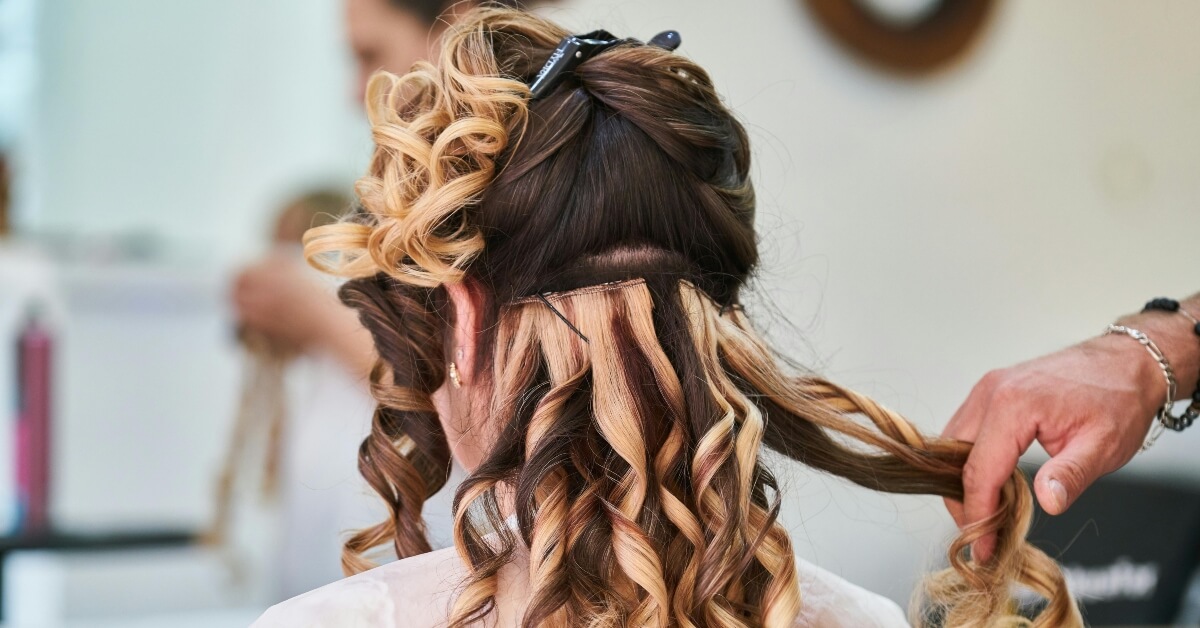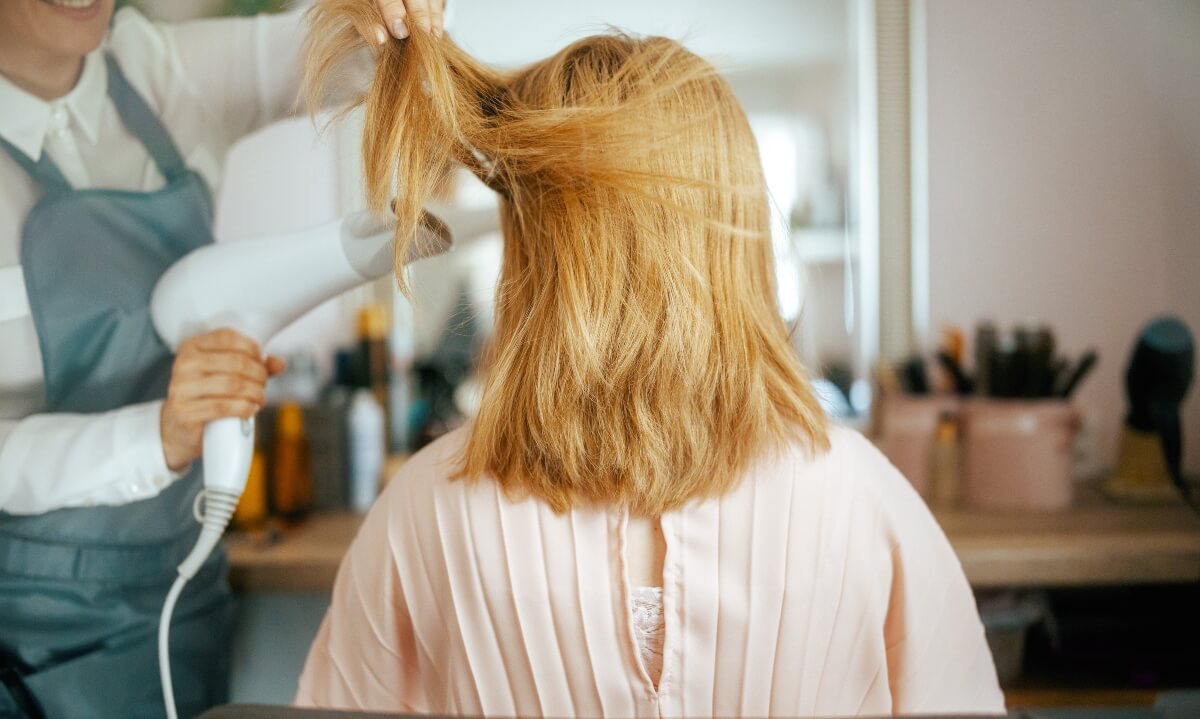
A blowout for your hair is a salon styling service where the hair is washed, blow-dried, and shaped with brushes and heat tools to create a smooth, polished, or voluminous finish. It is a temporary style, not a chemical treatment, and it is designed to improve how the hair looks and feels for several days.
A blowout is popular because it can make hair look more refined without cutting, coloring, or permanently changing the hair. The final result can be sleek and straight, full and bouncy, or softly waved depending on the styling approach and your hair type.
What Happens During a Professional Blowout?
A professional blowout usually begins with a shampoo and conditioner chosen for your hair’s needs. After washing, the stylist removes excess moisture, applies styling products, and blow-dries the hair in sections using a brush to direct shape and smoothness.
The service ends with finishing work that may include extra brushing, a flat iron for polish, or a curling iron for soft movement. The goal is to shape the hair and control frizz, not to alter the hair’s natural structure.
Is a Blowout a Hair Treatment or a Styling Service?
A blowout is a styling service, not a chemical hair treatment. It uses heat, airflow, and brushwork to temporarily shape the hair until the style fades or the hair is washed again.
This matters because a blowout does not permanently straighten, repair, or change the hair. It improves the hair’s appearance for a short period, which is why many people choose it for events, photos, or easier day-to-day styling.
Need a blowout? Set up your appointment at Societe Salon. Our expert stylists can help you get the beautiful hair you’ve always wanted.
How Does a Hair Blowout Work?
A hair blowout works by using controlled heat and directed airflow to dry the hair into a specific shape. At the same time, the stylist uses brush tension to smooth the surface, lift the roots, and guide the ends into the desired finish.
Hair is flexible when it is damp, which allows it to be shaped more easily during drying. Once the hair dries in that position, it holds the smoother or fuller look until moisture, humidity, or another wash changes it.
How Do Heat and Brush Tension Shape the Hair?
Heat and brush tension shape the hair by stretching and guiding each section as it dries. The stylist pulls the hair with a brush while directing warm air down the hair shaft, which helps create smoothness, bend, or lift.
This matters because the brush is doing more than detangling. It is helping set the hair into a polished style while reducing puffiness and uneven texture.
Why Does a Blowout Make Hair Look Smoother and Shinier?
A blowout makes hair look smoother and shinier because it helps flatten and align the outer layer of the hair, known as the cuticle. When the cuticle lies flatter, the hair reflects light more evenly and looks less frizzy.
That is why blowouts often leave hair looking glossier than air-dried hair. The smoother surface also helps the style feel softer and more controlled.
What Tools and Products Are Used in a Blowout?
A blowout uses a small group of tools and products that each serve a specific purpose. The dryer controls airflow, the brush creates shape, and the products help protect the hair while improving hold, volume, or smoothness.
This combination is what separates a polished blowout from simply drying the hair quickly. The process is built around control, not just speed.
What Kind of Blow Dryer Is Used for a Blowout?
A salon blowout usually uses a high-powered blow dryer with strong airflow and a concentrator nozzle. The nozzle helps direct the air exactly where the stylist wants it, which improves smoothness and control.
This matters because scattered airflow can rough up the hair and increase frizz. Focused airflow helps create a more even, polished result.
Why Do Stylists Use Round Brushes During Blowouts?
Stylists use round brushes because they help create tension, shape, and movement while the hair dries. A larger brush can create smoothness and soft body, while smaller brushes can create more bend and lift.
The brush size and technique affect the finished look. That is why one blowout can look sleek while another looks fuller or more curled.
What Styling Products Are Commonly Used During a Blowout?
Common blowout products include:
- Heat protectants
- Volumizing sprays
- Smoothing creams
- Finishing sprays
Each product is chosen to support the final result while helping the hair resist heat, frizz, or collapse.
A stylist may also use lightweight oils or serums in small amounts for shine. The right products depend on whether the goal is softness, fullness, humidity control, or longer wear.
What Are the Benefits of a Hair Blowout?
Some of the main benefits of a hair blowout include:
- Smoother texture
- Added volume
- Better shape
- Style that can last beyond the same day
Many people choose blowouts because they create a finished look without needing daily styling at home.
A blowout can also help hair feel cleaner, more manageable, and easier to maintain for several days. For women who want polished hair without committing to a chemical service, it can be a flexible option.
How Does a Blowout Add Volume and Body to Hair?
A blowout adds volume and body by lifting the roots and shaping the middle and ends of the hair as it dries. The stylist can direct sections upward or away from the scalp to create fullness instead of a flat finish.
This technique is especially helpful for fine or limp hair. Even when the hair is not thick, a blowout can make it look fuller and more structured.
Can a Blowout Help Reduce Frizz?
A blowout can help reduce frizz by smoothing the cuticle and using products that limit moisture absorption from the air. When the hair surface is more even, it is less likely to expand and become fuzzy.
This does not mean a blowout makes hair immune to humidity. It means the hair is styled in a way that resists frizz better than untreated or roughly dried hair.
How Long Does a Blowout Typically Last?
A blowout typically lasts about two to five days, depending on your hair type, scalp oil level, weather, and how you maintain it. Fine hair may lose shape faster, while thicker hair may hold the style longer.
Humidity, workouts, and frequent touching can shorten the life of a blowout. Good maintenance can help stretch the results for several days.
What Is the Difference Between a Blowout and a Blow Dry?
- A blow dry focuses mainly on drying the hair.
- While a blowout focuses on drying and styling the hair into a polished result.
- A blowout usually involves more sectioning, brushwork, and finishing detail.
This distinction matters because people sometimes use the terms interchangeably, even though the service experience and results can be different. A blowout is generally more intentional and longer-lasting than a simple dry.
What Is a Basic Blow Dry?
A basic blow dry is usually a quicker service that removes moisture from the hair and leaves it dry and manageable. It may include some smoothing, but it does not always involve the detailed shaping used in a blowout.
This can be useful when the goal is simply to dry the hair after a wash. It is less focused on volume, bend, or a finished style that lasts for days.
How Is a Blowout Different from a Regular Blow Dry?
A blowout is different from a regular blow dry because it uses more styling technique to create a specific look. The hair is usually worked in sections with a round brush, and the stylist focuses on shape, body, polish, and staying power.
A regular blow dry may leave the hair dry and neat, but a blowout is meant to look more refined. That is why blowouts are often chosen for events, photos, or longer-lasting style.
What Styles Can Be Created With a Blowout?
A blowout can create several different finishes depending on your hair type, brushwork, and finishing tools. The most common results are smooth and sleek hair, soft body and bounce, or loose waves.
This versatility is one reason blowouts remain popular. The same service can be adjusted to suit a more natural look or a more polished style.
What Is a Smooth and Sleek Blowout Style?
A smooth and sleek blowout style is a straighter, more controlled finish with minimal puffiness and a glossy surface. The stylist focuses on smoothing the cuticle and keeping the hair close to the head rather than building large volume.
This look works well for people who want polish and softness without extra bend. It is often chosen for a clean, refined appearance.
What Is a Voluminous or Bouncy Blowout?
A voluminous or bouncy blowout is a fuller style with lift at the roots and movement through the lengths. The stylist uses the brush to build body and create soft bend rather than leaving the hair flat.
This style is common when clients want hair that looks lively and styled without tight curls. It creates a fuller shape that still feels soft and touchable.
Can a Blowout Create Waves or Loose Curls?
A blowout can create waves or loose curls when the stylist uses brush technique or finishing tools to add bend after drying. The result is usually softer and more brushed-out than a traditional curled style.
This works well for clients who want movement without a formal curl pattern. The finish tends to look relaxed and polished at the same time.
Who Benefits Most From Getting a Blowout?
A blowout benefits people who want smoother, more manageable, or more polished hair without a permanent change. It can be useful for women who want a finished look for several days or who prefer not to style their hair themselves every morning.
The service can also help people learn what type of shape and finish works best for their hair. In that way, a blowout can be both practical and informative.
Which Hair Types Work Well With Blowouts?
Most hair types can work well with blowouts, but the technique changes based on the hair’s texture, density, and condition.
- Straight hair can gain body
- Wavy hair can look smoother
- Curly hair can be stretched into a softer finish
- Fine hair can appear fuller
Thick hair may need more time and stronger sectioning, while fragile or damaged hair may require lower heat and more care. The best result comes from adjusting the service to the person rather than treating every head of hair the same way.
When Do People Typically Get Blowouts?
People typically get blowouts before weddings, parties, vacations, work events, interviews, and professional photos. Others schedule them regularly because they like having polished hair without daily heat styling at home.
A blowout can also make sense after a haircut or color appointment. It helps show the shape and finish of the new style more clearly.
Does a Blowout Damage Hair?
A blowout can contribute to hair damage if heat is too high or styling is done too often without protection, but a properly performed blowout is usually considered manageable heat styling rather than severe damage. The level of risk depends on the condition of the hair, the tools used, and how carefully the service is performed.
This is why the answer is not simply yes or no. Blowouts involve heat, but technique and protection make a significant difference.
Is Heat Styling During a Blowout Harmful?
Heat styling during a blowout can be harmful when the hair is exposed to excessive temperature or repeated stress over time. Hair that is already dry, lightened, or fragile is more likely to show signs of breakage or roughness if heat is not controlled.
That said, one professional blowout done with care is not the same as constant high-heat styling at home. Controlled heat and proper preparation generally reduce the risk.
How Do Stylists Protect Hair During a Blowout?
Stylists protect hair during a blowout by:
- Applying heat protectant
- Using controlled temperature settings
- Directing airflow downward instead of blasting hair from all angles
- Working in sections
This matters because good technique protects both the surface of the hair and the long-term condition of the ends. A careful blowout should prioritize the look of the hair and its condition.
How Can You Make a Blowout Last Longer?
You can make a blowout last longer by keeping the hair dry, reducing friction, and using products that help control oil and humidity. Maintenance is important because even a well-done blowout can break down quickly if the hair is exposed to steam, sweat, or too much handling.
The goal is to preserve the shape without needing to restyle the hair fully. Small habits make a noticeable difference.
What Should You Do After Leaving the Salon?
After leaving the salon, it helps to:
- Avoid moisture
- Keep hands out of the hair
- Sleep in a way that reduces friction, such as sleeping on a silk or satin pillowcare
- Loosely secure long hair at night
- Avoid heavy workouts right away
- Try to stay out of humidity
The less moisture reaches the hair, the longer the style usually lasts.
What Products Help Maintain a Blowout?
Products that help maintain a blowout include:
- Dry shampoo
- Lightweight hairspray
- Anti-frizz spray
- Small amounts of smoothing serum
Dry shampoo is especially useful because it absorbs oil before the roots become heavy or flat.
The best products are usually lightweight. Heavy creams or oils can cause the hair to lose volume and shape faster.
Real Salon Scenarios Where Blowouts Are Common
Blowouts are common in both occasional and routine salon visits because they fit different needs. Some clients want a finished style for an important event, while others want easier hair management for the week ahead.
These real-life uses help explain why blowouts appeal to different hair types and lifestyles. The service is flexible, which is part of its value.
When Do Clients Book Blowouts for Special Events?
Clients often book blowouts for weddings, date nights, parties, holiday gatherings, interviews, and photo sessions because the style looks polished without appearing overly formal. A blowout can also serve as a base for an updo or added styling later in the day.
This makes it a practical choice when someone wants hair to look intentional and camera-ready. The finish is polished, but it can still feel natural.
Why Do Some Clients Schedule Weekly Blowouts?
Some clients schedule weekly blowouts because it simplifies their routine and reduces the need to use hot tools at home every day. Instead of restyling from scratch each morning, they may only need light touch-ups.
This can be especially helpful for women with thick, frizz-prone, or hard-to-manage hair. For them, one professional styling session can save time across the week.
FAQs About Hair Blowouts
How long does a blowout take at a salon?
A blowout usually takes about 30 to 60 minutes, though very long, thick, or highly textured hair may take longer. Timing depends on how much drying, sectioning, and finishing the stylist needs to do.
Can men get hair blowouts?
Yes, men can get hair blowouts if their hair length and style support it. The service is not gender-specific and can be adjusted for shorter styles, longer layers, or smoother finishes.
How much does a professional blowout usually cost?
A professional blowout often costs around $40 to $100 or more, depending on the salon, location, hair length, and any added styling. Prices are usually higher for thicker or longer hair because the service takes more time.
Can you do a blowout at home?
Yes, you can do a blowout at home with a dryer, brush, and the right products. Professional blowouts often look smoother and last longer because stylists use stronger tools, more precise sectioning, and more consistent technique.
When Should You Consider Getting a Blowout?
You should consider getting a blowout when you want smooth, styled hair for several days without changing your cut or color. It can make sense for special events, travel, professional photos, or any week when you want your hair to feel easier to manage.
A blowout can also be useful if you like polished hair but do not want to style it yourself every day. Because the service is temporary and customizable, it can be adjusted to suit different hair goals without requiring a long-term commitment.