What Is the Best Way to Protect Blonde Hair from Chlorine?
The best way to protect blonde hair from chlorine is to fully soak hair with clean water before swimming, apply a leave-in conditioner or oil as a barrier, wear a silicone swim cap, and rinse immediately after. Follow with a clarifying or swimmer’s shampoo and regular deep conditioning to remove buildup and restore moisture.
How Does Chlorine Affect Blonde Hair?
Chlorine strips natural oils from the hair and weakens the outer cuticle layer, making hair feel dry, rough, and more prone to breakage. It also allows minerals in pool water to bind to the hair, which can affect both texture and color.
For blonde hair, the impact is more noticeable because lighter shades reveal damage more easily. The cuticle is often already lifted from lightening services, which increases how much chlorine and minerals can enter the hair shaft. Over time, this can lead to dullness, dryness, and color changes.
Chlorine exposure typically leads to:
- Loss of natural oils, causing dryness
- Rough, raised cuticle that feels coarse
- Increased tangling and reduced manageability
- Higher risk of breakage during brushing or styling
- Color fading or unwanted tonal changes
Why Is Blonde Hair More Sensitive to Chlorine?
Blonde hair is more sensitive to chlorine because it is usually more porous than untreated hair. Lightening processes lift the cuticle, creating small openings that allow water, chlorine, and minerals to enter more easily.
This increased absorption means blonde hair holds onto chemicals longer than darker or untreated hair. As a result, it dries out faster and becomes more vulnerable to breakage and color changes after repeated pool exposure.
Blonde hair is more vulnerable because it:
- Has a more porous structure from lightening
- Absorbs water and chemicals more quickly
- Holds onto minerals longer than untreated hair
- Lacks darker pigment to mask discoloration
- Is often already weakened from chemical processing
Why Does Blonde Hair Turn Green in a Pool?
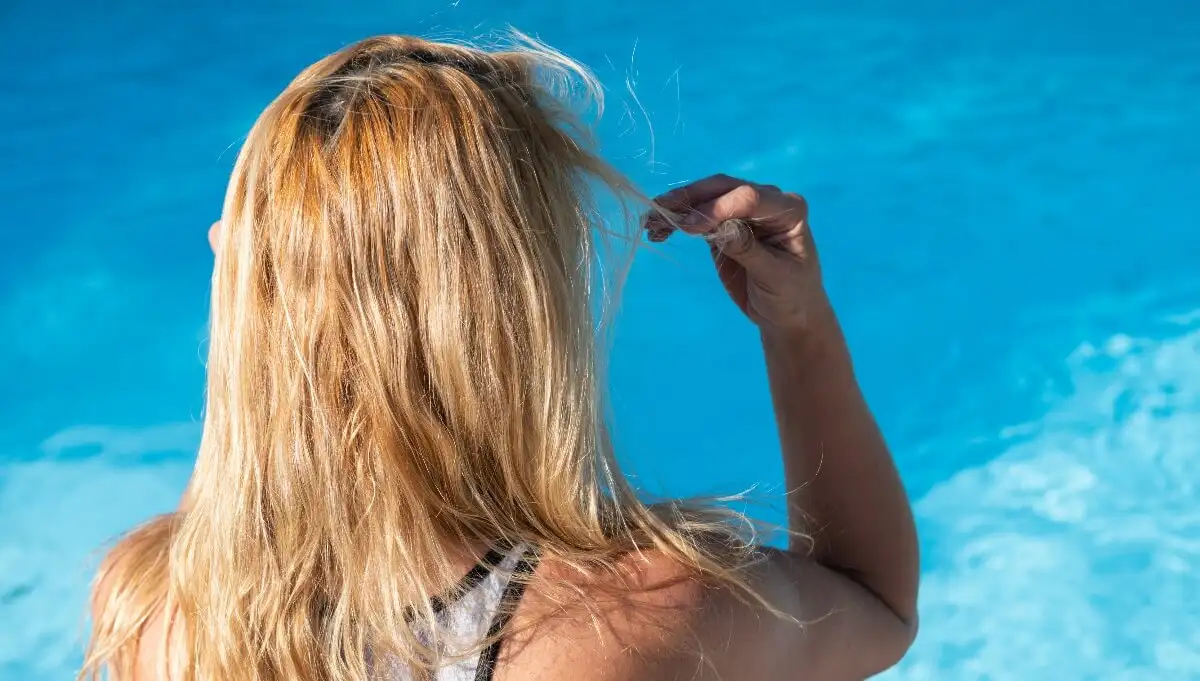
Blonde hair turns green in a pool due to copper and other metals in the water, not chlorine itself. These metals bind to the hair and oxidize when exposed to chlorine, creating a green tint.
The effect is more visible on light hair because there is less pigment to mask the color change. Hair that is porous or damaged is more likely to absorb these minerals, increasing the chance of discoloration.
How to Protect Blonde Hair from Chlorine Before Swimming
Protecting blonde hair before swimming focuses on reducing how much chlorine and minerals can enter the hair. The goal is to fill the hair with clean water and create a barrier that limits absorption.
A simple pre-swim routine includes:
- Wetting hair thoroughly with fresh water
- Applying a leave-in conditioner or oil
- Securing hair in a braid or bun
- Wearing a silicone swim cap if possible
Each step works together to reduce chemical exposure and protect the hair’s moisture balance.
Should You Wet Your Hair Before Entering the Pool?
Yes, wetting your hair before entering the pool helps reduce chlorine absorption. Hair acts like a sponge, so when it is already saturated with clean water, it takes in less pool water.
This step is one of the simplest and most effective ways to protect blonde hair. It creates a physical limit on how much chlorine and minerals can enter the hair shaft during swimming.
What Products Create a Protective Barrier on Hair?
Leave-in conditioners, natural oils, and lightweight hair masks can create a barrier that slows chlorine penetration. These products coat the hair and help seal the cuticle.
Apply the product evenly from mid-lengths to ends before swimming. Look for formulas that are hydrating but not overly heavy, as they should protect the hair without making it feel greasy or weighed down.
Common barrier products include:
- Leave-in conditioners that coat and hydrate
- Natural oils like coconut or jojoba oil
- Lightweight hair masks used before swimming
- Silicone-based serums that reduce water absorption
Does Wearing a Swim Cap Actually Help?
Yes, wearing a swim cap helps reduce exposure to chlorine, but it does not fully waterproof the hair. Silicone caps are the most effective because they fit more snugly and repel water better than fabric caps.
A swim cap works best when combined with pre-wetting and product application. Together, these steps provide layered protection against chlorine and mineral buildup.
Swim caps help by:
- Reducing direct exposure to chlorinated water
- Slowing how quickly hair becomes saturated
- Protecting the outer layer of the hair
- Minimizing contact with mineral-heavy water
What Should You Do to Blonde Hair After Swimming?
After swimming, the focus shifts to removing chlorine and restoring moisture. Prompt care prevents chemicals from continuing to damage the hair after you leave the pool.
A proper post-swim routine includes rinsing immediately, using the right shampoo, and replenishing hydration. Skipping these steps allows chlorine and minerals to remain on the hair, increasing dryness and discoloration.
A complete post-swim routine should include:
- Rinsing hair immediately with fresh water
- Using a chlorine-removing shampoo
- Gently detangling to prevent breakage
- Applying conditioner or a hair mask
- Allowing hair to air dry when possible
Why Is It Important to Rinse Hair Immediately After Swimming?
Rinsing hair immediately after swimming helps remove chlorine before it can continue to break down the hair’s structure. The longer chlorine stays on the hair, the more damage it can cause.
Even a quick rinse with fresh water can significantly reduce buildup. This step is especially important for blonde hair, which shows damage and discoloration more quickly.
What Type of Shampoo Removes Chlorine Buildup?
Clarifying, chelating, and swimmer-specific shampoos are designed to remove chlorine and mineral deposits. Clarifying shampoos remove product buildup, while chelating shampoos target metals like copper.
Swimmer shampoos often combine both functions and are formulated for frequent use. Choosing the right type depends on how often you swim and whether you are dealing with mineral discoloration.
How Often Should You Deep Condition After Swimming?
Deep conditioning should be done at least once a week for regular swimmers and more often if hair feels dry or brittle. Chlorine removes moisture, so consistent hydration is necessary to maintain softness and strength.
Look for masks that restore moisture and reinforce the hair structure. Regular conditioning helps prevent long-term damage and keeps blonde hair looking smooth and healthy.
You may need more frequent conditioning if:
- You swim multiple times per week
- Your hair feels rough or dry after rinsing
- You notice increased tangling or breakage
- Your color appears dull or faded
What Products Help Protect or Repair Chlorine-Damaged Blonde Hair?
Products that protect or repair chlorine-damaged hair focus on hydration, strengthening, and removing buildup. Each category serves a different purpose in maintaining hair health.
Common product types include:
- Leave-in conditioners for protection
- Bond-repair treatments for strength
- Hydrating masks for moisture
- Chelating products for mineral removal
Using a combination of these helps address both prevention and repair.
What Are the Best Leave-In Conditioners for Pool Protection?
The best leave-in conditioners for pool protection are lightweight, hydrating, and designed to smooth the cuticle. They should create a protective layer without leaving heavy residue.
Look for ingredients that support moisture retention and softness. A good leave-in conditioner helps reduce chlorine absorption while keeping hair manageable after swimming.
What Treatments Help Repair Chlorine Damage?
Bond-repair treatments, hydrating masks, and mineral-removal products help repair chlorine damage. Bond treatments strengthen the internal structure of the hair, while masks restore lost moisture.
Chelating treatments remove metals that cause discoloration and buildup. Using these products regularly helps reverse dryness and improve the overall condition of blonde hair.
How to Fix Blonde Hair That Turned Green from Chlorine
Blonde hair that has turned green can be corrected by removing mineral buildup and restoring balance to the hair. The goal is to eliminate the metals causing the discoloration.
Start with targeted cleansing and follow with conditioning treatments. Avoid harsh or unverified remedies that may further damage the hair.
What Causes the Green Tint in Blonde Hair?
The green tint in blonde hair is caused by copper and other metals binding to the hair and oxidizing. Chlorine accelerates this process but is not the direct cause of the color change.
Porous hair absorbs more of these minerals, making discoloration more likely. This is why lightened or damaged hair is more prone to turning green.
What Are the Most Effective Ways to Remove Green Tones?
The most effective ways to remove green tones include:
- Using a chelating or swimmer’s shampoo
- Applying a professional mineral-removal treatment
- Following with a deep conditioning mask
Salon treatments are often the fastest and most reliable option. At-home products can also work when used consistently and as directed.
Who Needs to Take Extra Care with Chlorine Exposure?
Certain hair types and conditions require extra care when exposed to chlorine. These include hair that is lightened, dry, or already damaged.
These hair types absorb more water and chemicals, increasing the risk of dryness, breakage, and discoloration. Preventive care is especially important in these cases.
Is Color-Treated or Bleached Hair More at Risk?
Yes, color-treated or bleached hair is more at risk because the cuticle is already lifted. This allows chlorine and minerals to enter the hair more easily.
As a result, the hair loses moisture faster and is more likely to experience fading or discoloration. Protective steps are essential to maintain the color.
Does Dry or Damaged Hair Absorb More Chlorine?
Yes, dry or damaged hair absorbs more chlorine because it has a rough, open cuticle. This makes it easier for water and chemicals to penetrate the hair shaft.
The more porous the hair, the more exposure it has to chlorine and minerals. Keeping hair hydrated helps reduce this absorption.
When Should You Avoid Swimming After Coloring Your Hair?
You should avoid swimming for at least 48 to 72 hours after coloring your hair. This allows the cuticle to close and helps the color fully set.
Swimming too soon can lead to faster fading and uneven color results. Waiting the recommended time helps preserve the tone and condition of blonde hair.
Real-World Tips from Salon Professionals and Swimmers
Simple, consistent habits make the biggest difference in protecting blonde hair from chlorine. Combining preparation and aftercare creates a routine that is easy to follow.
Many stylists recommend focusing on prevention first, then reinforcing hair health after exposure. Small steps done consistently can prevent most common issues.
What Is a Simple Pre- and Post-Swim Routine for Blonde Hair?
A simple routine includes:
- Wet hair with fresh water before swimming
- Apply a leave-in conditioner or oil
- Wear a swim cap when possible
- Rinse immediately after swimming
- Wash with a swimmer or clarifying shampoo
- Apply a deep conditioner regularly
This routine helps minimize chlorine exposure and maintain hair health over time.
For best results, keep this routine consistent:
- Repeat before every swim, not just occasionally
- Adjust products based on hair condition
- Use deeper treatments after heavy pool exposure
- Monitor hair texture and adjust frequency
Frequently Asked Questions About Chlorine and Blonde Hair
Can You Swim in a Pool with Blonde or Bleached Hair?
Yes, you can swim with blonde or bleached hair if you take protective steps. Pre-wetting, using a barrier product, and rinsing immediately after swimming help reduce damage and discoloration.
Is Chlorine Damage to Hair Permanent?
Chlorine damage is not always permanent, but repeated exposure can cause lasting dryness and breakage. Most effects can be improved with proper cleansing, conditioning, and repair treatments.
Does Coconut Oil Really Protect Hair from Chlorine?
Coconut oil can help protect hair by creating a barrier that slows chlorine absorption. However, it should be used along with other steps like pre-wetting and rinsing for best results.
What Happens If Chlorine Stays in Your Hair Too Long?
Prolonged exposure can lead to:
- Increased dryness and stiffness
- Tangling and reduced slip
- Higher risk of breakage
- Gradual color distortion or dullness